Low Back Pain and Physical Therapy: Evidence-Based Solutions
Do you have persistent low back pain in Antalya? Low back pain causes, evidence-based physical therapy methods, and PubMed/PEDro research under the guidance of Physiotherapist Ali Oksuz.
Fzt. Ali Öksüz | Özel Sağlık Meslek Hizmet Birimi
Physiotherapist
Last updated: · Reviewed by: Fzt. Ali Öksüz
Quick Answer
Low back pain is the leading cause of disability worldwide. Over 90% of cases are non-specific, stemming from biomechanical and postural imbalances. Clinical trials (PubMed/PEDro) prove that avoiding bed rest and combining manual therapy with customized active exercise is the gold standard of treatment.
Table of Contents
- What Are You Experiencing Biomechanically and Neurophysiologically?
- Secondary Complaints Alarm: Does Only Your Back Hurt?
- How Does Manual Therapy Approach Low Back Pain? (EBM & Bialosky Model)
- Treatment Protocol: How the Process Works and How Many Weeks It Takes
- 🚩 Red Flags (What NOT to Do!)
- 📚 Academic References and Evidence-Based Medicine (EBM)
- Individual Physical Therapy Programs in Antalya Konyaaltı
Low Back Pain and Physical Therapy: Biomechanical and Neurophysiological Approach
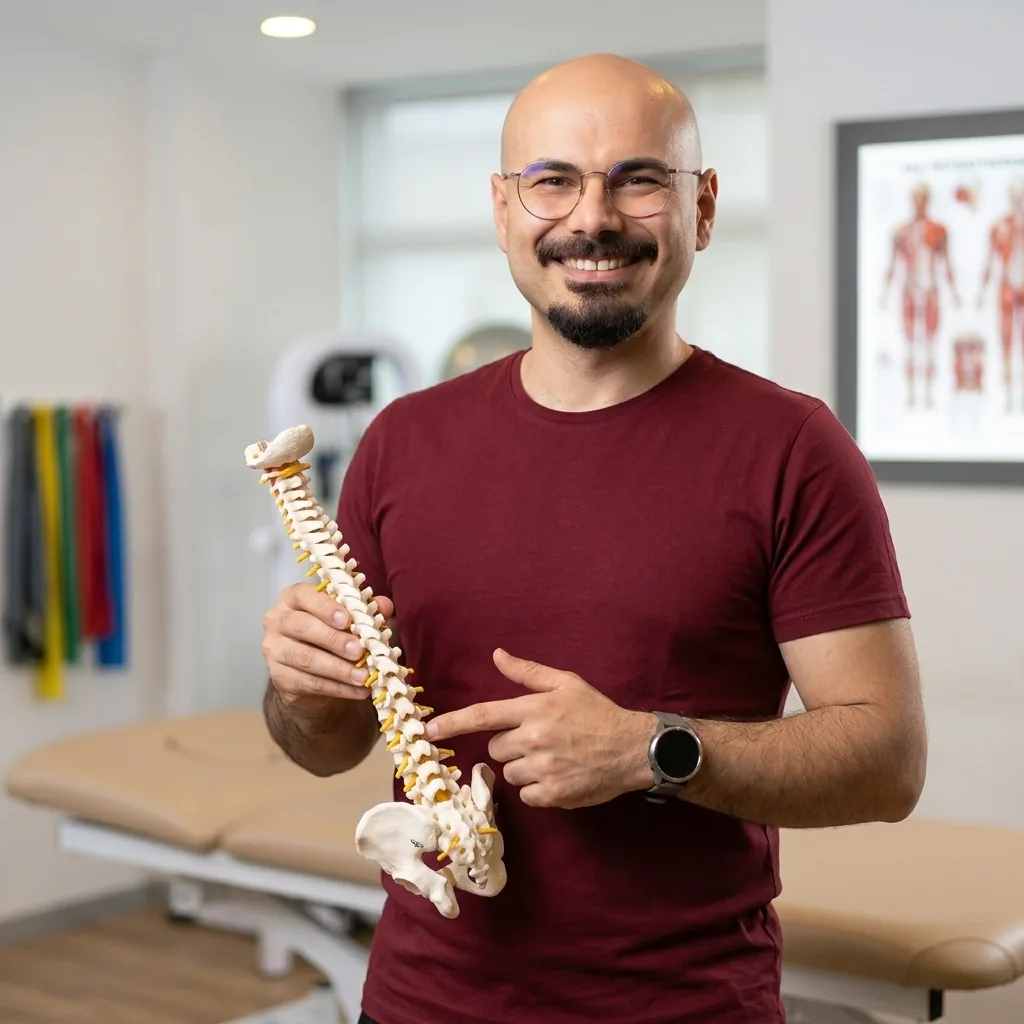 Physiotherapist Ali Oksuz explains lumbar spine anatomy and biomechanical movement analysis at his clinic in Antalya Konyaaltı.
Low back pain is one of the most common health problems in modern society, with an lifetime occurrence rate of over 80%. Many of our clients assume they have a herniated disc when they experience back pain and feel anxious. However, current medical literature shows that approximately 90% of back pain is non-specific mechanical back pain, which is not associated with any structural damage (herniation, fracture, tumor, etc.). At our clinic in Antalya Konyaaltı, we address back pain not just as a local problem, but within the biomechanical integrity of the entire kinetic chain.
What Are You Experiencing Biomechanically and Neurophysiologically?
The lower back (lumbar spine) is the main bridge that transfers the weight of the upper body to the pelvis and legs. An imbalance on this bridge triggers chain reactions:
- Disruption of Load Distribution: Due to faulty sitting postures during the day and weak abdominal and gluteal muscles, the load on the spine exceeds the capacity of the discs, which act as natural shock absorbers. Facet joints and ligaments stretch excessively, stimulating pain receptors.
- Kinetic Chain Compensation: An individual with back pain changes hip and back mechanics to avoid pain (antalgic posture). This leads to shortening in the piriformis or gluteal muscles in the hip, and increased load on the knee joints, creating new pain focal points.
Secondary Complaints Alarm: Does Only Your Back Hurt?
Secondary symptoms accompanying back pain that indicate the biomechanical depth of the problem include:
- Complaint 1: A dull ache or radiating pain extending from the hip to the back of the thigh while walking or standing (referred pain).
- Complaint 2: Stiffness and difficulty straightening up in the lower back for the first 15–30 minutes after getting out of bed in the morning.
- Complaint 3: Mild numbness or tingling in the legs while sitting.
How Does Manual Therapy Approach Low Back Pain? (EBM & Bialosky Model)
Classic massages or pain medications temporarily suppress pain signals but do not correct spinal mechanics. Evidence-based manual therapy (Maitland, Mulligan, and Kaltenborn concepts) works on two levels:
- Mechanical Effect: Specific gliding and traction techniques applied to restricted facet joints reduce joint pressure, stimulate synovial fluid circulation, and increase microcirculation around the nerve root.
- Neurophysiological Effect (Bialosky Mechanism): Controlled mechanical stimuli applied to the joint reach the brain via fast nerve fibers (A-beta). These stimuli close the gate to slow pain fibers (C fibers) in the spinal cord (Gate Control Theory) and trigger descending pain-relief mechanisms (endorphin release) from the brain.
Treatment Protocol: How the Process Works and How Many Weeks It Takes
The World Physiotherapy (WCPT) and international guidelines (JOSPT, NICE) recommend staying active and progressive physical therapy programs for back pain management. The average 4–6 week process consists of the following phases:
- Phase 1 (Acute Phase): Relief of severe pain and protective muscle spasms. Gentle manual therapy touches, myofascial releases, and breathing exercises are prominent in this phase.
- Phase 2 (Mobilization Phase): Restoring pain-free range of motion. Spinal rotations, hip mobility exercises, and neural mobilizations (nerve gliding) are added.
- Phase 3 (Stabilization and Protection Phase): To prevent pain recurrence, the deep core muscles (Multifidus, Transversus Abdominis) are strengthened with Clinical Reformer Pilates and medical exercises.
🚩 Red Flags (What NOT to Do!)
Safety is our top priority in physical therapy. The following symptoms are called "Red Flags" and require immediate referral to a medical physician:
- Loss of bowel or bladder control, inability to urinate (suspected Cauda Equina Syndrome).
- Progressive motor weakness in the legs (e.g., foot drop).
- Severe and persistent pain that wakes you up from sleep and does not improve with rest.
- Unexplained weight loss, fever, or history of cancer.
📚 Academic References and Evidence-Based Medicine (EBM)
- Hayden, J. A., et al. (2021). Exercise therapy for chronic non-specific low back pain. Cochrane Database of Systematic Reviews. (PEDro Score: 9/10).
- Bialosky, J. E., et al. (2009). The mechanisms of manual therapy in the treatment of musculoskeletal pain: A systematic review. Physical Therapy.
- Delitto, A., et al. (2012). Low Back Pain: Clinical Practice Guidelines Linked to the International Classification of Functioning, Disability, and Health from the Orthopaedic Section of the American Physical Therapy Association. JOSPT.
- PEDro Database: Physical therapy clinical guidelines for low back pain management.
Individual Physical Therapy Programs in Antalya Konyaaltı
You do not have to live with persistent back pain. At our clinic, we identify the source of pain through modern clinical tests and kinetic chain analysis, and offer you the most appropriate evidence-based manual therapy and clinical pilates programs.
📍 Fzt. Ali Öksüz | Özel Sağlık Meslek Hizmet Birimi
Toros Mah. 801. Sok. No:4/4 Konyaaltı / Antalya
👉 For consultation and appointments, Contact Us on WhatsApp.
Legal Disclaimer: This page does not replace physician diagnosis or offer definitive cure guarantees. It has been prepared based on physiotherapy science (articles and guidelines) to raise health awareness, in compliance with the Health Advertising Regulations.
Related Treatments
The methods described in this article are delivered within the following treatments.
Manual Therapy & Joint Mobilization
International Evidence-Based (EBM) Joint and Spine Rehabilitation
Learn moreClinical Reformer Pilates in Antalya
Personalized Reformer Pilates with Physiotherapist Ali Öksüz · Konyaaltı
Learn moreMuscle & Chronic Pain Management
Biomechanical Approach to Fibromyalgia and Myofascial Pain Syndrome
Learn moreFrequently Asked Questions
The most common questions about this topic. If you can't find your answer, message us directly on WhatsApp.
No. Contrary to old beliefs, lying on a hard floor increases muscle spasm. It is best to sleep on a medium-firm supportive mattress that accommodates the body's natural curves, potentially placing a pillow under the knees to rest the lower back.
Urgent medical attention is required if back pain is accompanied by loss of bowel/bladder control, saddle anesthesia (numbness in the groin/perineum area), progressive motor weakness in the legs, fever, or unexplained weight loss.
A corset can provide support only during the first few acute, high-pain days. Long-term use weakens the deep stabilizing core muscles, potentially leading to chronic pain.
Ready to talk about your complaint?
Call or message us on WhatsApp for a personalised clinical physiotherapy programme after your physician's diagnosis. I'm happy to answer your questions.
About the Author
Physiotherapist Ali Oksuz
Physiotherapist providing clinical physiotherapy services in Konyaaltı, Antalya. Applies evidence-based approaches (Mulligan, Maitland, Vodder MLD) in manual therapy, lymphedema rehabilitation, clinical reformer pilates, and orthopedic rehabilitation. The articles convey the physiotherapy process after a physician's diagnosis for informational purposes; it does not replace medical treatment.