Herniated Disc and Manual Therapy: Is a Non-Surgical Solution Possible?
For those suffering from herniated disc in Antalya, non-surgical treatment options with manual therapy, kinetic chain approach, and clinical reformer pilates applications.
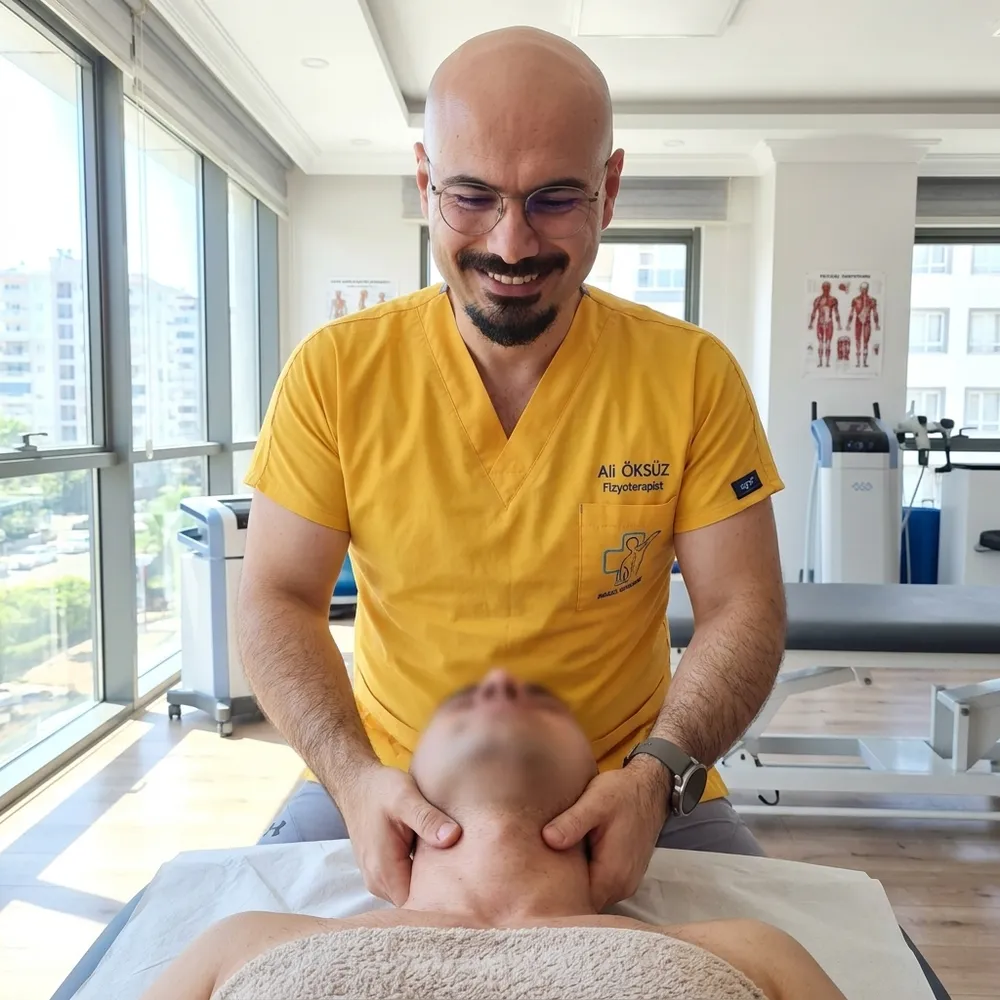
Physiotherapist Ali Oksuz | Private Health Profession Service Unit
Fizyoterapist
Hızlı Cevap
The vast majority of herniated disc cases diagnosed by a physician (about 85% according to international guidelines) can be managed without surgery, through a manual therapy and clinical exercise program. The success of the process depends on correct assessment, a personalized program, and disciplined exercise continuity.
İçindekiler Tablosu
- What Are You Experiencing Biomechanically and Neurophysiologically?
- Secondary Complaints Alarm: Does Only Your Back Hurt?
- How Does Manual Therapy Approach a Herniated Disc?
- Treatment Protocol: How Does the Process Work and How Many Weeks Does It Take?
- Resolution Specifications: "Sleeping Muscles" and Reformer Pilates
- 🚫 "Dangerous Mistakes" NOT to Do!
- Transparent Frequently Asked Questions (FAQ)
- 📚 Academic Bibliography and Evidence-Based Medicine (EBM)
- Advanced Physiotherapy Support in Antalya Konyaalti
Herniated Disc and Manual Therapy: A Biomechanical Approach
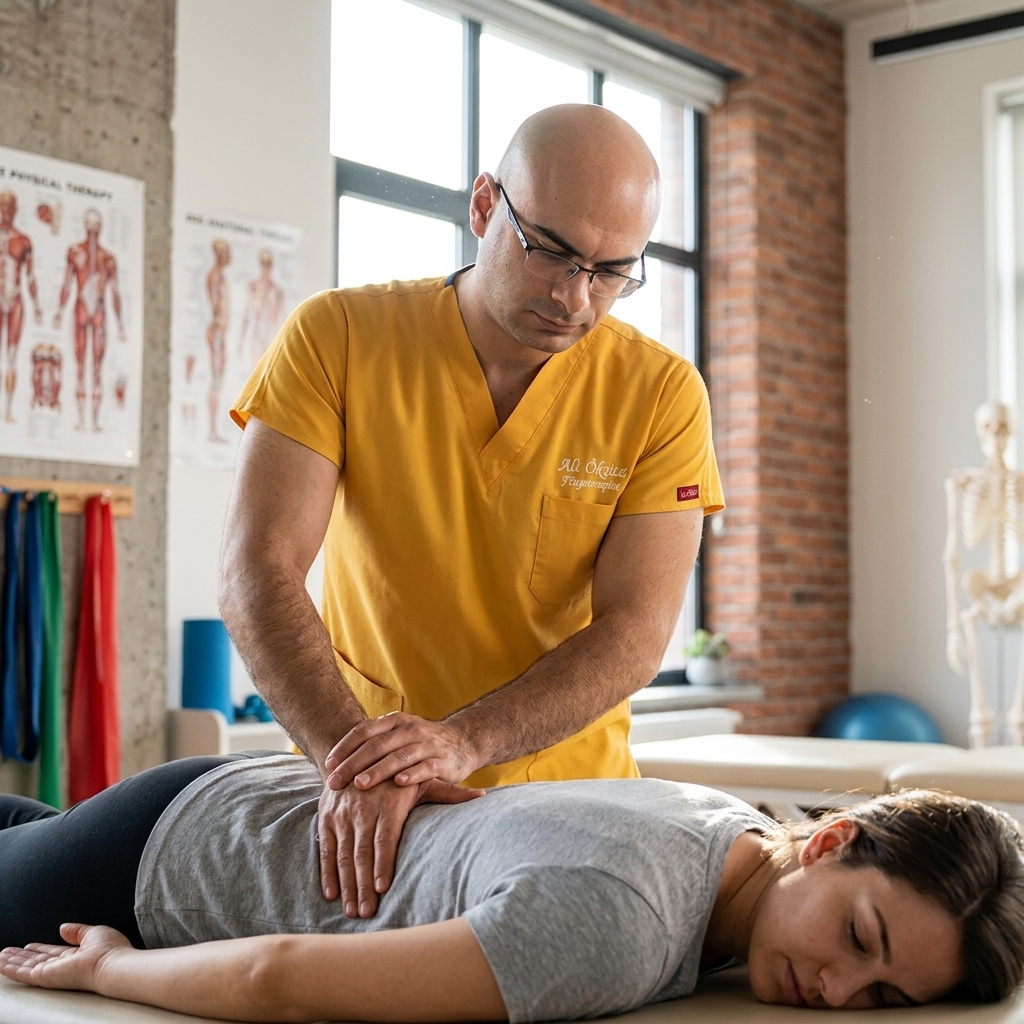 Visual is for introductory purposes. It is not an actual session photo.
When diagnosed with a herniated disc, the first option that comes to the mind of many patients is surgical intervention. However, in modern physiotherapy approaches, we know that the problem is often not a simple disc protrusion, but a biomechanical collapse that develops gradually. In our clinic in Antalya Konyaalti, we open the doors to permanent recovery with manual therapy in cases that do not require surgery.
What Are You Experiencing Biomechanically and Neurophysiologically?
Herniation is the protrusion of the gelatinous structure inside the discs between the vertebrae, pressing on the nerves. But the main problem is not only this pressure, but the chain reactions of the body to it. According to the Principles of the Kinetic Chain:
- Load on the Spine: As a result of incorrect posture, overloading, or age-related disc degeneration, the spine loses its natural shock absorber function. This situation leads to inflammation and pain in the nerve roots.
- Kinetic Chain Balance: A problem in the lower back affects the entire body. Patients start to walk or sit in incorrect positions to avoid pain. This creates secondary problems in the hip, knee, and even the neck area.
Secondary Complaints Alarm: Does Only Your Back Hurt?
A herniated disc does not only cause back pain. Most of the time, our patients apply to us with the following secondary complaints:
- Complaint 1: Electrification and numbness radiating from the hip to the leg, and even to the heel (sciatica pain).
- Complaint 2: Loss of strength in the leg or foot, a feeling of "stepping on empty air".
- Complaint 3: A feeling of locking and stiffness in the lower back when getting out of bed in the morning.
How Does Manual Therapy Approach a Herniated Disc?
Classic pain relievers or superficial massage applications only provide temporary relief; they do not solve the source of the problem. The evidence-based manual therapy approach we apply aims to reorganize spinal biomechanics.
With specific concepts like Mulligan and Maitland applied in our clinic:
- The mechanical pressure created by the hernia on the nerve is reduced (Decompression).
- Spine segments that are locked are opened manually, allowing the nerves to move freely.
- Pain signals going to the brain are blocked through natural ways via the "Descending Pain Inhibition" mechanism.
Treatment Protocol: How Does the Process Work and How Many Weeks Does It Take?
Clinical guidelines of world standards recommend a priority 8-12 week physiotherapy process in herniated discs that do not require urgent surgery.
- Phase 1 (Acute): Breaking severe pain and muscle spasm, reducing inflammation. Manual therapy and electrotherapy modalities are used in this process.
- Phase 2 (Mobility): Gaining pain-free range of motion. Mobility is increased with nerve mobilizations and specific stretching techniques.
- Phase 3 (Stabilization): The protective phase for the improvement to be permanent. Under back-stabilizing medical exercises and Clinical Reformer Pilates, the back muscles (core region) are strengthened.
Resolution Specifications: "Sleeping Muscles" and Reformer Pilates
After the pain is eliminated with manual therapy, the most important part of the job begins: Protection. The deep muscles surrounding the lower back region (Multifidus, Transversus Abdominis) are usually "sleeping" or weakened in hernia patients.
Clinical Reformer Pilates works these muscles in an isolated way without putting a vertical load on the spine, thanks to spring resistance. With the principle of axial elongation (extending the spine), the distance between the discs is increased, and the body builds its own "natural corset".
🚫 "Dangerous Mistakes" NOT to Do!
- Unconscious "cracking" or "pulling" operations can make the hernia even worse.
- Trying to lie on hard floors is contrary to anatomy and increases muscle spasms.
- Long-term use of braces without a doctor's recommendation makes the lower back muscles lazy.
Transparent Frequently Asked Questions (FAQ)
1. Does clinical physiotherapy hurt?
No. Evidence-based manual therapy applications are done within pain limits, respecting the tissue. Forcing and sudden, uncontrolled movements are not applied.
2. Will my pain return after I recover?
If you comply with the posture rules taught to you after the treatment and add protective medical exercises like Clinical Reformer Pilates to your routine, the risk of recurrence is minimized.
📚 Academic Bibliography and Evidence-Based Medicine (EBM)
- Bialosky, J.E., et al. (2009). The Mechanisms of Manual Therapy in the Treatment of Musculoskeletal Pain. Journal of Orthopaedic & Sports Physical Therapy.
- McKenzie, R. (2003). The Lumbar Spine: Mechanical Diagnosis and Therapy.
- Cochrane Database of Systematic Reviews: Physical conditioning programs for workers with back and neck pain.
Advanced Physiotherapy Support in Antalya Konyaalti
Living with a herniated disc is not your destiny. You can regain your health with correct biomechanical analysis and evidence-based manual therapy applications.
📍 Physiotherapist Ali Oksuz | Private Health Profession Service Unit
Toros Mah. 801. Sok. No:4/4 Konyaalti / Antalya
👉 For consultation and clinic appointments, reach us immediately on WhatsApp.
Legal Disclaimer: This page does not replace a physician's diagnosis or a definitive cure guarantee. It has been prepared based on physiotherapy science in accordance with the Health Advertising Regulation to increase health awareness, based on physiotherapy science (articles and guidelines).
Bu Konuyla İlgili Uygulamalarımız
Yazıda bahsedilen yöntemler aşağıdaki uygulamalarımız kapsamında yürütülür.
Antalya Manuel Terapi & Eklem Mobilizasyonu
Konyaaltı Kliniğinde Uluslararası Kanıta Dayalı (EBM) Eklem ve Omurga Rehabilitasyonu
Detaylı bilgiKlinik Reformer Pilates
Kişiye Özel, Güvenli ve Medikal Egzersiz Yaklaşımı
Detaylı bilgiKas & Kronik Ağrı Yönetimi
Fibromiyalji ve Miyofasiyal Ağrı Sendromuna Biyomekanik Yaklaşım
Detaylı bilgiSıkça Sorulan Sorular
Yazıyla ilgili en çok sorulan sorular. Cevabı bulamadığınız bir konu varsa doğrudan WhatsApp'tan yazabilirsiniz.
In cases such as loss of bladder/bowel control (cauda equina syndrome), progressive muscle weakness, or pain unresponsive to conservative treatment for 6-12 weeks, the physician makes a surgery evaluation. Other than these conditions, international guidelines recommend conservative physiotherapy first.
With specific traction and mobilization techniques, the mechanical pressure between the disc and the nerve is reduced, inflammation in the surrounding tissues is dissipated, and descending pain inhibition pathways through the brain are activated.
Most clients report significant relief in the first 2-3 sessions; however, for permanent gains, a program of 4-8 sessions followed by strengthening the body with clinical reformer pilates is required.
Şikayetinizi konuşmaya hazır mısınız?
Hekim teşhisi sonrası kişiye özel klinik fizyoterapi programı için bizi arayın veya WhatsApp'tan yazın. Sorularınız varsa cevaplamaktan memnuniyet duyarım.
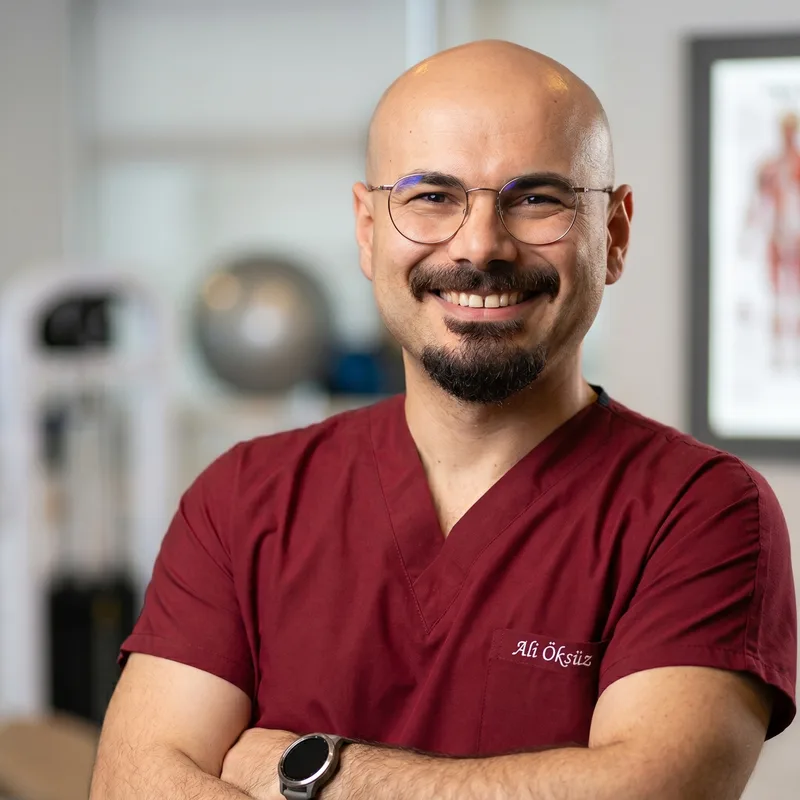
About the Author
Physiotherapist Ali Oksuz
Expert physiotherapist providing clinical physiotherapy services in Konyaaltı, Antalya. Applies evidence-based approaches (Mulligan, Maitland, Vodder MLD) in manual therapy, lymphedema rehabilitation, clinical reformer pilates, and orthopedic rehabilitation. The articles convey the physiotherapy process after a physician's diagnosis for informational purposes; it does not replace medical treatment.