Chronic Pelvic Pain (Prostatitis) in Men and Physiotherapy
Do you have persistent groin, testicular, or perineal pain? Pelvic floor physiotherapy in cases of non-bacterial prostatitis where urological tests are clear.
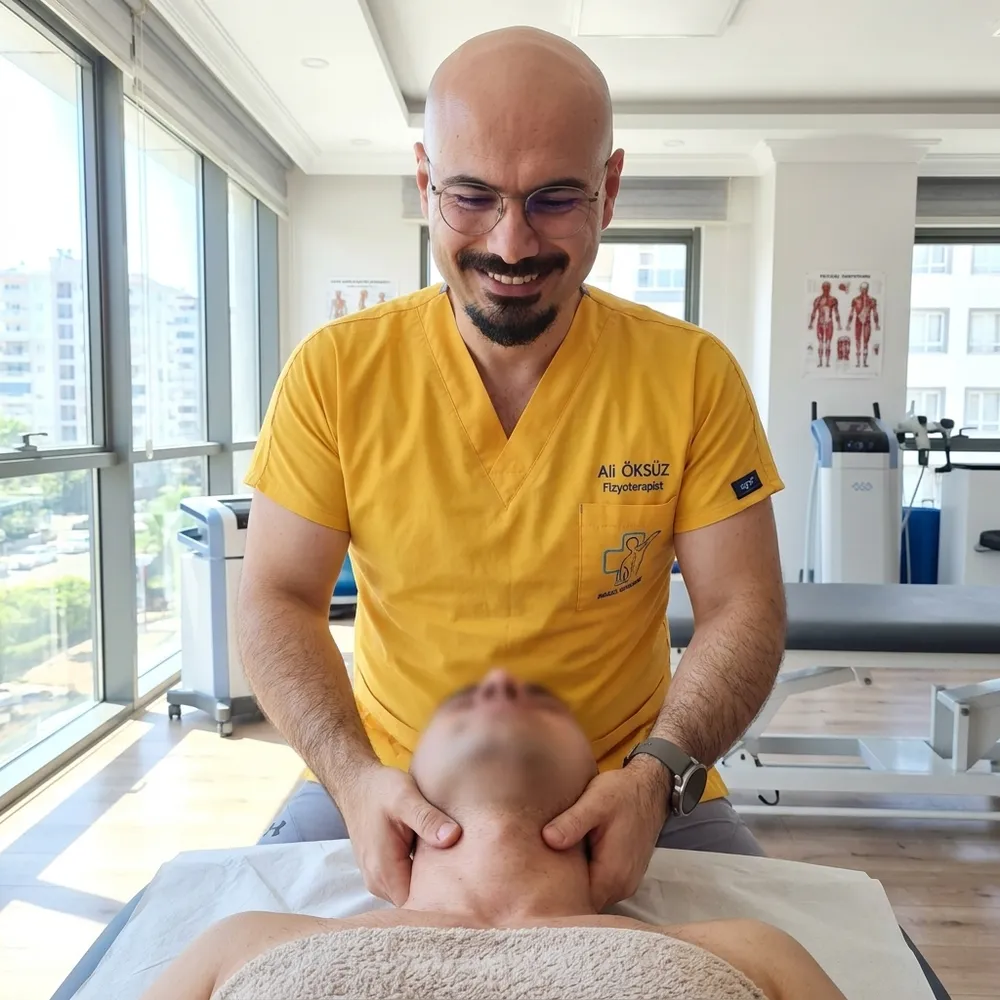
Physiotherapist Ali Oksuz | Private Health Profession Service Unit
Fizyoterapist
Hızlı Cevap
A significant portion of chronic pelvic / groin / perineal pain where no urological pathology is found during a physician's exam is related to spasm in pelvic floor muscles. These muscle-sourced pains can be managed with biofeedback, breathing education, and manual relaxation techniques applied after physician approval.
İçindekiler Tablosu
Chronic Pelvic Pain (Prostatitis) in Men and Physiotherapy
You are experiencing a constant stinging, aching, and feeling of heaviness in your groin area, in your testicles, or in the lower part when sitting (perineal area). You have consulted a urologist many times, tests have been performed, boxes of antibiotics have finished, but your physician stubbornly says "no infection appears", yet your pain persists. This picture is referred to in medical literature as "Chronic Pelvic Pain Syndrome (CPPS)" or "Non-Bacterial Chronic Prostatitis". The good news is; the source of these mysterious pains is usually not the prostate organ itself, but a severe spasm in the pelvic floor muscles surrounding that region.
What Is Male Pelvic Floor Dysfunction?
The pelvic floor muscles are a muscle group that lines the bottom of the pelvis like a hammock, provides bladder and bowel control, and functions in sexual activities. Intense stress, prolonged sitting, heavy lifting, or past urinary tract infections cause these muscles to remain constantly "contracted" (spasm) as a defense mechanism.
- Mechanism: The pelvic floor muscles harden and develop trigger points, just like your neck muscles getting knotted. This spasm compresses the nerves in the region, producing severe neuralgic pain radiating to the testicles, tip of the penis, lower abdomen, or around the anus.
- Benefit: Under the guidance of a physiotherapist, the contraction-relaxation mechanism of these muscles is retrained. Thanks to manual release, the pressure on the nerves is lifted, the burning and straining sensation experienced during urination improves, and the feeling of sitting on a golf ball disappears.
Who Performs It and How Is It Applied?
Male pelvic floor physiotherapy is applied by physiotherapists specializing in this field, in close communication with the urologist, with maximum attention paid to clinical privacy and ethical rules.
- Assessment: Your posture, breathing pattern, and abdominal-gluteal muscles are evaluated. It is checked whether you use diaphragmatic breathing correctly.
- Biofeedback and Relaxation (Down-Training): Since the problem in these cases is not muscle weakness, but rather "over-tightness" (hypertonus), the patient is trained in relaxation (down-training) instead of Kegel (squeezing) exercises. With special EMG Biofeedback devices, you learn conscious relaxation by seeing how contracted the muscle remains on the screen.
- Manual Therapy (Trigger Point Release): When necessary, specific manual stretching and trigger point release techniques (internal and external myofascial release) are applied to the pelvic floor muscles to reach the source of the spasm.
What Does Academic Evidence Say? (Literature)
The role of physiotherapy in Chronic Pelvic Pain Syndrome has a high ranking in current urological guidelines:
"The European Association of Urology (EAU) guidelines and recent PubMed meta-analyses in 2024 strongly recommend 'Pelvic Floor Physiotherapy (Myofascial Release)' and cognitive-behavioral approaches as first-line treatments in Type 3 Chronic Prostatitis (CPPS) cases where no infection (bacteria) is detected, instead of long-term antibiotic use."
How Does the Physiotherapy and Rehabilitation Process Progress?
This process is a journey in which the patient increases bodily awareness. It progresses with a plan of average 6 to 10 sessions. Initially, tensions in the gluteal, abdominal (psoas), and inner thigh muscles are resolved externally. Correct breathing (diaphragmatic breathing) exercises are taught accompanied by biofeedback. Permanent recovery begins when the patient starts to realize that they clench their pelvic floor just like they clench their teeth in moments of stress, and learns to consciously relax this muscle.
Safe Practices to Do at Home
- Deep Diaphragmatic Breathing (Reverse Kegel): Twice a day, lie on your back and bend your knees. Place your hand on your abdomen. Feel your abdomen swell as you take a deep breath in through your nose, and feel your pelvic floor and groin area sag down and relax like an elevator as you exhale slowly.
- Warm Sitz Bath: Sitting in warm/hot water placed in a basin or tub for 15-20 minutes in the evenings increases blood flow in the area and significantly relieves spasm.
- Use of Ergonomic Pillow: If you work long hours at a desk, reduce the pressure (on the perineal area) by using a donut cushion with a hole in the middle.
🚩 Red Flags (What NOT to Do!)
- Using antibiotics on your own for months saying "this is prostate inflammation" despite your physician saying "no infection" does nothing but disrupt your intestinal flora. The problem is of muscle and nerve origin.
- Doing standard "Kegel Exercises (squeeze-release)" found on the internet is the biggest mistake that can be made in Chronic Pelvic Pain. Squeezing a muscle that is already over-contracted (in spasm) further increases your pain exponentially. What you need is not strengthening, but "relaxation (down-training)".
- You should take a break from sports that increase intra-abdominal pressure and mechanical pressure on the perineal area, such as cycling or doing deep squats with heavy weights, until your pelvic floor has fully recovered.
Need Biomechanical Support?
If you have been diagnosed by your physician, you can manage this problem, which reduces your quality of life, with evidence-based medical exercises under the guidance of a physiotherapist.
📍 Physiotherapist Ali Oksuz
Toros Mah. 801. Sok. No:4/4 Konyaalti / Antalya
👉 For consultation and appointments, reach us immediately on WhatsApp.
Legal Disclaimer
This page does not replace a physician's diagnosis or a definitive cure guarantee. It has been prepared based on physiotherapy science in accordance with the Health Advertising Regulation to increase health awareness.
Bu Konuyla İlgili Uygulamalarımız
Yazıda bahsedilen yöntemler aşağıdaki uygulamalarımız kapsamında yürütülür.
Sıkça Sorulan Sorular
Yazıyla ilgili en çok sorulan sorular. Cevabı bulamadığınız bir konu varsa doğrudan WhatsApp'tan yazabilirsiniz.
It might be a case of non-bacterial Chronic Pelvic Pain Syndrome (CPPS); in this case, the source is not an infection, but chronic spasm in pelvic floor muscles. The decision depends on your physician's evaluation.
The process is carried out completely respecting the client's privacy, mainly utilizing externally applied biofeedback, breathing, and manual relaxation techniques.
The process must begin with a differential diagnosis conducted by a urology physician; following the exclusion of urinary tract infection, stones, prostate pathology, or neurological reasons, a referral to physiotherapy is made for non-bacterial chronic pelvic pain. Consulting a physician first is mandatory in case of sudden-onset severe pain, fever, blood in urine, or loss of strength. The program is always planned individually based on the physician's diagnosis and guidance with an evidence-based approach.
Şikayetinizi konuşmaya hazır mısınız?
Hekim teşhisi sonrası kişiye özel klinik fizyoterapi programı için bizi arayın veya WhatsApp'tan yazın. Sorularınız varsa cevaplamaktan memnuniyet duyarım.

About the Author
Physiotherapist Ali Oksuz
Expert physiotherapist providing clinical physiotherapy services in Konyaaltı, Antalya. Applies evidence-based approaches (Mulligan, Maitland, Vodder MLD) in manual therapy, lymphedema rehabilitation, clinical reformer pilates, and orthopedic rehabilitation. The articles convey the physiotherapy process after a physician's diagnosis for informational purposes; it does not replace medical treatment.